|
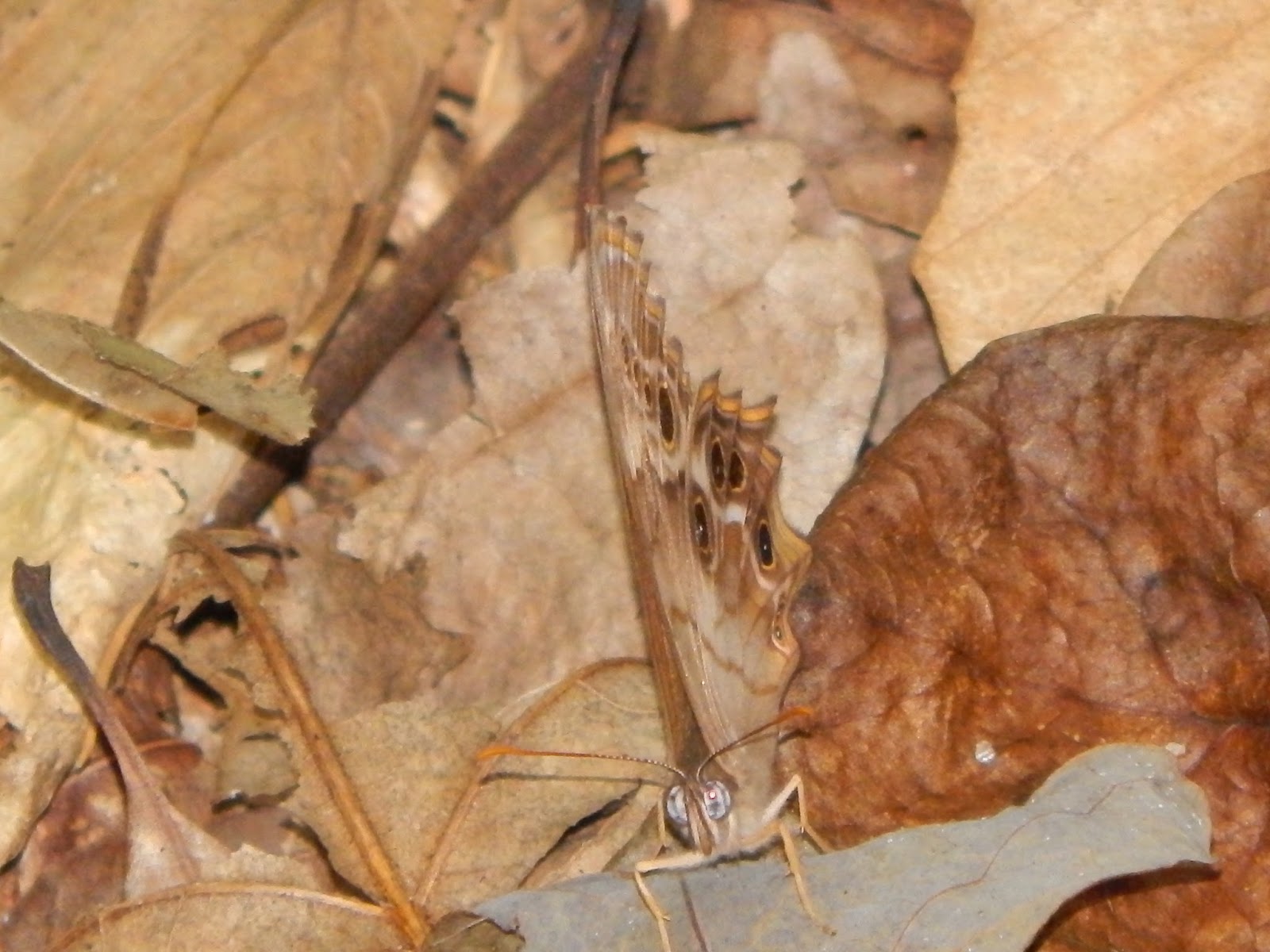
| Common Buckeye (Junonia coenia), La Salle Parish, Louisiana |
In the previous post, I covered the Hesperiidae, Papilionidae, and Pieridae butterflies. In this entry (part two of three) I'll talk about the rest of the butterfly species I've identified during this combined spring-summer season, during which time I've been learning to identify Lepidoptera. The third and final post of this series will cover moths. These are just casual accounts of what I've seen and where I've seen them in central Louisiana (and sometimes in other regions of the state) during this spring and summer. For more on the methods and purpose of this series of entries (and apologies for my amateur/novice status/approach!), see the introductory section of the previous entry in this blog (
butterflies part one).
And now, the butterflies...
Lycaenidae (Hairstreaks, Blues, and their kin):
 |
| Gray Hairstreak (Strymon melinus), Kisatchie National Forest, Grant Parish, Louisiana |
Graceful, pretty, ...and sometimes downright bizarre-looking: these are the hairstreaks and their kin. The few species from this family that I've been able to observe and photograph so far have given me some of my favorite butterflying experiences.
 |
| Gray Hairstreak, Kisatchie NF, Grant Parish |
Gray Hairstreaks are strikingly patterned little butterflies. The underside of the wings are mostly gray/blue-gray, there are faux-eye orange-and-black markings at the base of the 'tails' -- which extend from the back edge of the hind wing like ragged, feathery antennae. The 'eyes' and series of black-and-white dotted lines give the impression of a cartoonish 'monster face', perhaps confusing would-be predators about which end is the true head and possibly deterring attacks. So far I've only found this species a couple of times in Grant Parish, though it is likely more common/widespread.
 |
Gray Hairstreak (Strymon melinus) with detail of wing decorations, Kisatchie National Forest, Grant Parish, Louisiana
Both of the Gray hairstreaks that I've observed were perched on vegetation with their back ends pointing up. |
 |
| Red-banded Hairstreak (Calycopis cecrops), La Salle Parish, Louisiana |
 |
Eastern Tailed-Blue (Cupido comyntas),
Kisatchie NF, Grant Parish |
The Red-banded Hairstreak is similar to the Gray Hairstreak. The underside of the wings are gray/brownish-gray with ribbons of red-orange bordered on the trailing side by a narrow black-and-white zigzag. The underside of the body is pale blue-white. So far I've only seen this species in La Salle Parish.
Eastern Tailed-Blue is a species I've only seen with certainty on one occasion, on an August morning at the edge of an area of mature pine forest adjacent to a weedy field with lots of wildflowers in the Kisatchie National Forest in Grant Parish. The coloring on the underside of the wings is a pale blue-ish gray with a series of black or dusky heart-shaped or chevron markings on the outer edge of the underside of the wings. The black marks near the base of the 'tails' (narrow appendages of the hind wing) have red-orange partially surrounding them and an obvious heart shape. There are also a number of small black crescents scattered and in arcs on the underside of the wings.
 |
| Eastern Tailed-Blue (Cupido comyntas), Kisatchie National Forest, Grant Parish, Louisiana |
 |
| Summer Azure (Celastrina neglecta), Snyder Road near Trout Creek, La Salle Parish, Louisiana |
 |
| Summer Azure, La Salle Parish |
Summer Azure was one of my favorites to observe and photograph. So far, I've only recorded them with certainty from the Trout Creek area west of Jena in La Salle Parish. The ones I saw were along roads in damp, thick, mature deciduous woods or nearby pine thickets and secondgrowth. They are small, powdery blue butterflies that, on closer inspection, have small blackish 'pencil mark' squiggles and spots on the undersides of the wings. The big black eyes contrast strongly with the overall coloring and there are black and white rings around the antennae.
 |
| Summer Azure (Celastrina neglecta), Snyder Road, La Salle Parish |
Nymphalidae (Brush-footed Butterflies):
 |
| Gulf Fritillary (Agraulis vanillae), La Salle Parish, Louisiana |
Here's your classic butterfly: the Monarch, the Queen; Gulf Fritillary and Red-spotted Purple and Painted Lady. But alongside the larger or more vibrantly colored species that we've all noticed are the small, brown satyrs and their kind, and secretive or uncommon habitat specialists like the Pearly-eyes.
I would start off with everyone's favorite, the Monarch, but I actually hadn't recorded/photographed one in the field during this year's Lepidoptera learning period until this September, so that will be covered in a later series about this Fall's Leps.
 |
| American Snout (Libytheana carinenta), Jena, La Salle Parish, Louisiana |
 |
| American Snout (Libytheana carinenta) wing |
The American Snout is an odd looking species. The labial palps ("snout" at the front of the head) are extended, giving it a unique profile. The edges of the wings are somewhat angular with the upper surface of the wings being orange and black with white spots and the underside of the hind wing and a part of the front wing are camouflage brown-gray with some of the orange, black, and white present on the underside of the front wing. I've found this species around La Salle Parish in the Spring.
 |
| American Snout (Libytheana carinenta), Jena, La Salle Parish |
 |
| Gulf Fritillary (Agraulis vanillae) nectaring on Lantana, La Salle Parish, Louisiana |
 |
| Gulf Fritillary, La Salle Parish |
The Gulf Fritillary is among the most common butterflies I've encountered in Cenla during the summer months. The upper surface is a brilliant orange with narrow dark lines extending from the black trailing edges of the wings and a few small white spots and black spots. The under side of the wings are boldly patterned in large, narrow, white oblongs against an orange-ish background. White and orange striped head and body. These butterflies are found in a variety of habitats and frequently visit flower plantings in yards and gardens.
Less colorful, and, in my experience less common, is the Variegated Fritillary. The coloring on the undersurface on the wings is 'camouflage' browns, like bark or a dead leaf.
 |
| Variegated Fritillary (Euptoieta claudia), Catahoula Parish, Louisiana |
The upper surface is a more subdued, pale shade of orange than that of the Gulf, but also with dark lines, dividing the back of the wings into 'stained glass window' patterns. I've photographed this species in Catahoula Parish in Cenla, and Cameron Parish in southwestern Louisiana.
 |
| (blurry, sorry) Variegated Fritillary (Euptoieta claudia), Peveto Woods Sanctuary, Cameron Parish, Louisiana |
 |
| 'Astyanax' Red-spotted Purple (Limenitis arthemis astyanax), La Salle Parish, Louisiana |
 |
'Astyanax' Red-spotted Purple showing purple hues,
Catahoula NWR Bushley Bayou Unit, Catahoula Parish |
I've found the 'Astyanax' Red-spotted Purple to be an abundant, near-ubiquitous species in a variety of habitats in this area. They are mostly black in color with a strong blue iridescence to the wings (and in some lights, purple or green-blue too) and have a series of orange spots and light blue crescents/chevrons on the wing. The Astyanax subspecies, which is the only one I've seen, differs significantly in appearance from the "White Admiral" form, which is found further north. I've seen the species feeding from the juices of rotting fruit, on animal droppings, as well as nectaring on flowers
 |
| 'Astyanax' Red-spotted Purple (Limenitis arthemis astyanax), La Salle Parish, Louisiana |
 |
| Pearl Crescent (Phyciodes tharos), Snyder Road, La Salle Parish, Louisiana |
 |
| Pearl Crescant, La Salle Parish |
The Crescents are attractive little butterflies. The Pearl Crescent is moderately common in the areas I frequent and are largely bright orange with black lines, spots, and patches creating a spider web of patterns, dividing the orange into numerous 'panels'. I've usually found them along roads and trails in wooded areas or along woodland edges.
 |
| Pearl Crescent, Jena, La Salle Parish |
 |
| Phaon Crescent (Phyciodes phaon), Peveto Woods Sanctuary, Cameron Parish, Louisiana |
The Phaon Crescent I've only found while on a birding trip to southwest Louisiana, though I understand that they can be found in Cenla as well. The Phaon's most obvious difference in appearance from the Pearl is a prominent series of pale/whitish-orange panels in arcs across the back of the wings in addition to the bright orange and black. Both species have largely pale brown and orange-ish coloring on the underside of the wings.
 |
| Phaon Crescent, Peveto Woods, Cameron Parish |
 |
| Phaon Crescent, Peveto Woods Sanctuary, Cameron Parish, Louisiana |
 |
| Queen (Danaus gilippus), Peveto Woods, Cameron Parish |
The Queen, a close relative of the Monarch, is another that, so far, I've only identified on a trip to SW Louisiana.
The prize for most eye-catching pattern must go to the Common Buckeye. The background color is light brown; the combination of stripes, bars, circles, and blotches in shades of orange, blue, purple, black, and white is difficult to describe, but the pictures tell the story.
 |
| Common Buckeye (Junonia coenia) nectaring on Lantana, La Salle Parish, Louisiana |
The namesake false eyes and the white spectacles are perhaps the most prominent components of their elaborate wing patterning.
 |
| Common Buckeye, Jena, La Salle Parish |
 |
| Common Buckeye, La Salle Parish |
I've found these butterflies to be fairly common in a variety of habitats across the parts of central Louisiana that I've gotten to butterfly in so far.
The Question Mark has a tiny, white question mark-like shape on the underside of the wing, which is otherwise brown camouflage.
 |
Question Mark (Polygonia interrogationis), Minnow Ponds Road,
Catahoula NWR Bushley Bayou Unit, Catahoula Parish, Louisiana |
The upper surface of the wings is pumpkin-orange with simple patterns of black spots and bars. The edges of the wings have an irregular contour which can also suggest a question mark shape. I've found them along roads in mostly wooded areas.
 |
| Question Mark (Polygonia interrogationis), Snyder Road, La Salle Parish, Louisiana |
The Eastern Comma is very similar to the Question mark. However, the pattern of spots on the upper surface of the Comma's wings differs slightly (count the spots on the front wings in the pictures) and there is a white comma/semicircle in place of the question mark on the undersurface (though the marks on the two species can be quite similar). They seem to like wet woods or adjacent areas.
 |
| Eastern Comma (Polygonia comma), Catahoula NWR Bushley Bayou Unit near Hwy 126, Catahoula Parish, Louisiana |
I've seen these two species mostly in the spring and early summer.
 |
| Red Admiral (Vanessa atalanta), near Hwy 126, Catahoula NWR Bushley Bayou Unit, Catahoula Parish |
 |
Red Admiral (wing detail),
Kisatchie NF, Grant Parish |
The Red Admiral is moderately common in this area and I've seen it in a variety of habitats, though usually in open areas or in the edge of woods. The background color is black and brown, but look for the prominent red-orange band on the front wings and along the trailing edge of the hind wings and the white spots near the tip of the front wings.
 |
| Red Admiral, Kisatchie National Forest, Grant Parish, Louisiana |
 |
| American Lady (Vanessa virginiensis), Grant Parish, Louisiana |
 |
American Lady (Vanessa virginiensis), Catahoula NWR Bushley Bayou Unit,
Catahoula Parish |
The Painted Lady and American Lady are two similar species with complex and colorful patterns. The American Lady, which I've found much more frequently of the two, seems to be moderately common in the area and tends to be found in open areas such as weedy fields of wildflowers or road right-of-ways.
The coloring above is chiefly orange with heavy black markings and white spots near the wing tips, but below is a jumble of brown patches on whitish with a prominent salmon-pink wash to part of the front wing and a series of eye spots consisting of rings of black, gold, blue, and white along the trailing edge of the underside of both wings.
 |
| American Lady, Catahoula NWR Bushley Bayou Unit, Catahoula Parish |
 |
| Painted Lady (Vanessa cardui), La Salle Parish |
 |
| Painted Lady, La Salle Parish |
The Painted Lady is at first glance very similar, but the differences in the pattern and coloring on the underwing add up to create a more intricate or tangled effect. The upper surface is similar to American, with orange, black, and white.
The underside of the wings sport numerous smaller black and brown patches than the American's, against a white background, with white veins like the American. There's a prominent area of orange-pink on the underside of the front wing and there are smaller and more numerous eye spots in the row toward the back edge of the wings. I've only successfully photographed this species in La Salle Parish.
 |
| wing close-up, Painted Lady (Vanessa cardui), La Salle Parish, Louisiana |
 |
Southern Pearly-eye (Enodia portlandia), Sicily Island Hills Wildlife Management Area,
Catahoula Parish, Louisiana |
One of my favorite finds was encountering the Southern Pearly-eye in the woods of Sicily Island Hills WMA in Catahoula Parish. Tom Pollock and I encountered a group of three pearly-eye -type butterflies while walking a trail and were able to get numerous -- albeit not very crisp -- photos of one individual. These woods are home to both Northern and Southern Pearly-eye. Ours was identified as Southern.
 |
| Southern Pearly-eye (Enodia portlandia), Sicily Island Hills WMA, Catahoula Parish, Louisiana |
The general coloring of the underside of the wings is waves of light and medium brown. There's a series of prominent false-eye circles running up both wings. They consist of brown, gold, black, and white rings/circles, essentially surrounded by an area of white that spreads across part of both wings. The four eye-circles on the front wing are in a slightly crooked/bowed line, where as these on the Northern Pearly-eye would be in a straight line. The difference is subtle. However, all the differences in field marks between these two species seem to be quite subtle and I find them quite tricky to separate.
The antennae bulbs, however, are orange on the Southern and typically black or partially black on the Northern. The Northern's bulbs can, however, be mostly orange in some populations, including those discovered living in the Sicily Island Hills a few years ago.
 |
| Southern Pearly-eye (Enodia portlandia), Sicily island Hills WMA, Catahoula Parish |
The wings seem to have a scalloped surface. There are gold/carmel and brown bands at the trailing edge.
These butterflies are picky about their habitat: they inhabit wet forests where switch cane (the caterpillars' host plant/source of food) is present. They are presumably much less common than most or all of the other species covered in this blog post and are of some conservation concern.
 |
| habitat around Southern Pearly-eye location, Sicily Island Hills WMA, Catahoula Parish, Louisiana |
 |
Little Wood-Satyr (Megisto cymela), Catahoula Hummingbird and Butterfly
Garden, Grant Parish |
I've only identified Little Wood-Satyr once. This was an individual seen during late May at Catahoula Hummingbird and Butterfly Garden in Grant Parish. These little butterflies are generally fairly non-descript pale gray-brown with some brown lines. Each side, on both surfaces of the wings, there's four gold-ringed black eye marks with two small blue spots in the center, and additional smaller 'eyes' between those on the underwing. The actual eye is dark and bordered with white.
 |
Little Wood-Satyr (Megisto cymela), Catahoula Hummingbird and Butterfly Garden, Kisatchie National Forest,
Grant Parish, Louisiana |
 |
| Carolina Satyr (Hermeuptychia sosybius), Catahoula Hummingbird and Butterfly Garden, Grant Parish |
 |
Carolina Satyr (Hermeuptychia sosybius) feeding on juice from
fallen pear, Jena, La Salle Parish |
I've found the Carolina Satyr much more regularly and sometimes in considerable numbers. I find them in shady woods as well as edge habitat woodland-adjacent, and, so far, in Grant, La Salle, and Catahoula Parishes.
They are small and easy to over look, however. The color is gray-brown with some lines in slightly darker brown. The row of eye spots has some which are smaller, golden circles, and some more prominent ones which are larger and have black interiors with a small white or blue center spot.
 |
Carolina Satyr (Hermeuptychia sosybius) feeding on juice from
fallen pear, Jena, La Salle Parish |
Note their blue eyes and the orange antennae bulbs in the photos.
 |
| Carolina Satyr (Hermeuptychia sosybius), Kisatchie National Forest, Grant Parish, Louisiana |
The next entry will summarize the moths I've observed while learning my Lepidoptera this spring and summer. That will be posted soon!